








Sign-up to The Backbone, our free fortnightly newsletter for anyone who owns, runs, or works in one of the millions of businesses across the UK. Get the inside track from real business owners just like you

Connectivity
What can we help you with?

Business broadband comparison
Compare business broadband packages

Business broadband is different to home broadband
Get more reliable speeds, a static IP, and better security
Bionic is the comparison site for your small business

We compare a vetted panel of trusted business phone and broadband, and VoIP suppliers

How is home broadband
different from business broadband?
While you might get what seems like similar advertised speeds, a business connection brings several benefits that we think are essential for any SME:
- Prioritised customer service and business-specific service-level agreements
- More reliable download speeds and better upload speeds
- A static IP address (making your connection more reliable)
- Enhanced security
- Access to additional phone services, including VOIP
If this all sounds like gobbledygook, Bionic’s connectivity experts can translate it all into plain English and help you figure out whether a small business broadband deal is the best option for you.
What business broadband providers does Bionic work with?
At Bionic, we work with business broadband providers that offer a wide range of products to meet the needs and budget of any business. Our trusted panel of suppliers also guarantee great service alongside competitive rates, to help keep your business connected.
- Daisy Communications – Award-winning B2B connectivity specialists with 88,000 commercial customers of all sizes and sectors, specialists in business VoIP and premium connectivity solutions.
- Focus Group – The UK’s leading B2B independent providers of business technology, specialists in VoIP.
- Plusnet – Broadband and phone provider with a UK based support team that’s available 24/7.
- TalkTalk Business – Communications provider for over 25 years with over 180,000 business customers.
- BT – The UK’s largest supplier of business broadband.
What types of business broadband are available?
There are two types of business broadband available:
- ADSL – This runs on the same copper cables as your business phone line. Although they can carry data efficiently up to a point, speeds slow down the further your business is from your local phone exchange. This type of connection is being phased out in preparation for the analogue switch-off in 2027, which means you’ll need to switch to fibre at some point before then anyway.
- Fibre optic – These underground cables are made of plastic or glass and carry data much faster than their copper counterparts. This will become standard once copper cables are disconnected and discontinued. Find out more at our guide to fibre optic broadband.
The type of connection you need will depend on the size and location of your business. Not only do speeds and connection types vary according to the area you work from, but the number of people using the connection at any one time also has an impact.
Although an ADSL connection might be enough for your small business, we recommend making the switch to fibre to get better connection speeds and future-proof your business. Another impact of the analogue switch-off is that your landline will need to be switched over to VoIP, which means phone calls will be made over an internet connection and not those old copper cables.
Business broadband FAQs
To help you understand more about switching business broadband with Bionic, here are the answers to some of our most frequently asked questions.
How do I switch my business broadband provider?
You can switch business broadband provider in three simple steps with Bionic:
- 1. Tell us about your business broadband needs online - We use smart data to avoid you having to answer endless questions.
- 2. We’ll speak to you to find the right broadband package - We’ll talk you through your options and answer any questions to help you choose the right package.
- 3. You can leave the rest to us - If you decide to switch business broadband with Bionic, we’ll take care of everything for you, and we’ll keep you informed every step of the way.
For more information, check out our guide on how to switch business broadband with Bionic.
How much does business broadband cost?
The price of your business broadband package will vary based on your needs, but rest assured our experts will ensure you don’t overpay by talking you through the exact speeds you will receive at your premises.
What should I look for in a business broadband deal?
There are three main things you should look for in a business broadband deal:
- Speed – The only way to make sure you’re not overpaying for speeds you can’t get is to know the exact speeds that are available at your property. At Bionic, we base our quotes on the speeds you can get, not a supplier’s headline marketing figure.
- Price – Our fixed price promise means your supplier will never increase the price of your broadband during the life of your contract.
- Tailored options - We know that every business is different, so we tailor your broadband package to mee your exact needs, including things WiFi and VoIP if needed.
Does my business need a static IP?
Most businesses can run smoothly with a dynamic IP address, which comes as standard with most broadband deals. But if your business needs its own network and wants to host its own website, email, VPN, and FTP server, then a static IP is best. For more information, check out our static IP address guide.
What is an ISP?
ISP stands for Internet Service Provider, which is simply a company that supplies your internet connection and services.
How can I get a good WiFi signal around my office?
There are a number of things you can do to improve the WiFi signal in your office, including:
- Keep the router in a central location. Make sure it’s not kept in a cupboard and try to keep it away from external walls and other electrical equipment.
- Set up a separate guest WiFi for visitors to your office. This means they won’t interfere with business bandwidth and slow down connection speed for your staff.
- Upgrade your equipment. If your router isn’t quite cutting it, you might want to get a signal booster or upgraded router from your ISP.
What’s a good internet speed for my business?
The speeds you need will vary according to how you use the internet. If you have one user making VoIP calls, you’ll only need speeds of just 1 - 2Mbps. But you’ll need faster speeds if more people need to use the VoIP system at once.
For example, you might just need a basic connection for some activities such as running a payments system
If you’re streaming or transferring large files, you might want a superfast or ultrafast package.
What’s the difference between a normal and a fibre optic connection?
Standard ADSL broadband connections carry data along copper wires, but fibre optic connections use glass or plastic wires that are faster at transmitting data. If you’re comparing business broadband, you should make the switch to fibre as soon as possible as the UK’s analogue phone network will be switched off by 2025, meaning the copper wires used by ADSL will no longer work.
Do download limits and allowances matter?
Download limits and allowances do matter, as they can restrict the amount of work you can do online, including browsing, streaming and sharing files. At Bionic, we only offer unlimited deals, so you’ve no need to worry about limits and allowances.
Our team shares essential knowledge on business connectivity
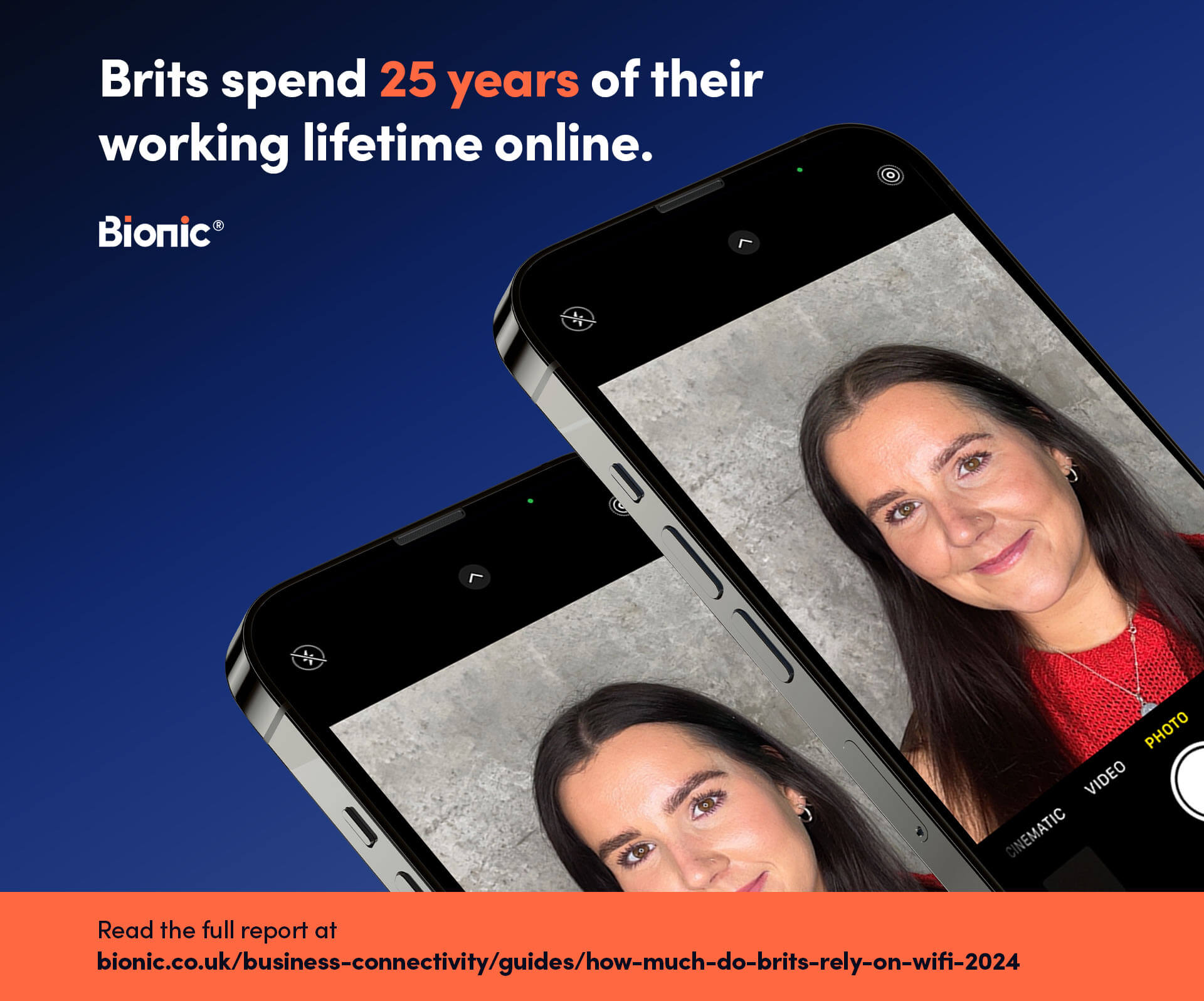
How much do we rely on WiFi?
WiFi is no longer a luxury — it's a necessity. We rely on the internet for almost everything. But ha...

What are WiFi Black Spots? 6 Ways To Bring Your Internet Back up to Speed
WiFi black spots are areas within a building where the wireless signal is too weak or unable to reac...

What are network management systems?
For your business to thrive and develop, you must manage your digital presence and networks to the b...
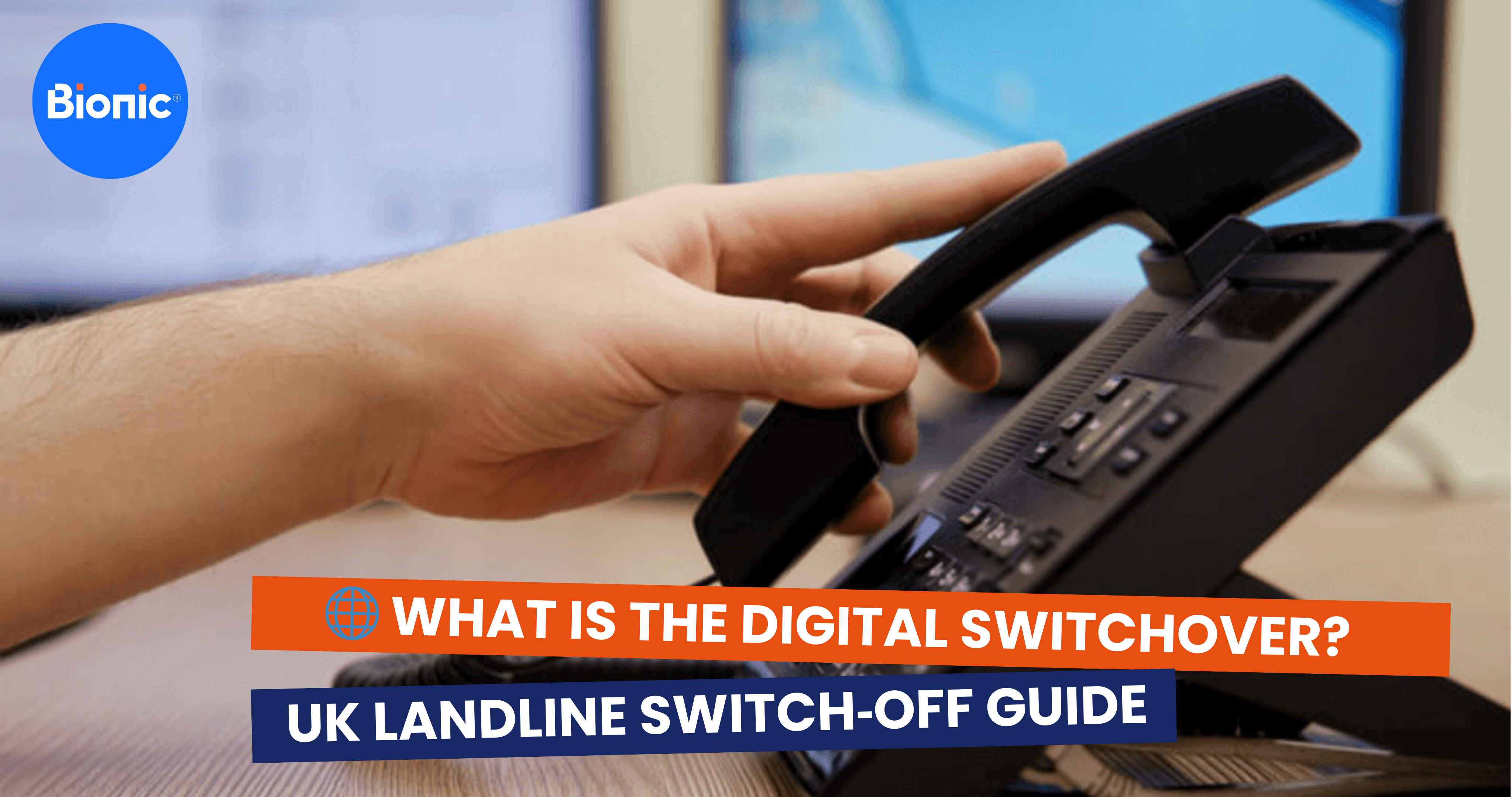
What is the digital switchover? Everything you need to know about the analogue phone switch off
The digital switchover - when all analogue phone lines will be turned off - has been put back until...