










Who needs public liability insurance?


Public liability insurance is not a legal requirement for most UK businesses, but it can be considered an essential cover to have if your business interacts with members of the public, clients, or third parties. Whether you run a business at your premises, you're visiting a client's site, or in a public space — public liability insurance can help protect you against compensation claims for accidental injury claims made by the public, or your customers,
third party property damage claims in case you damage someone else's property. Without it, a single claim could set you back thousands of pounds in compensation and legal fees.
According to the Association of British Insurers (ABI), UK insurers pay out approximately £22 million per day across all business insurance claims — which shows how often businesses face losses. Explore our full business insurance guides hub for help choosing the right cover for your business.
This content is for general information purposes only. It does not constitute insurance advice and should not be relied upon as such. Always read the full policy documents and consult an FCA-authorised broker if you're unsure on cover options.
Quick Answer
Most UK businesses do not legally have to hold public liability insurance, but it can be considered essential for any business that comes into contact with the public, clients, or third parties. It can help cover compensation claims and legal costs if someone is injured or their property is damaged as a result of your actions or business activities. Many clients, councils, and venues may not work with you if you don’t have it. If you work entirely from home with no visitors and no client contact, you may not need it — but you should always confirm your specific situation with a broker - speak to our team at Bionic.
What is public liability insurance?
Public liability insurance is a policy that helps protect your business against claims made by members of the public, clients, or other third parties who suffer injury or property damage as a result of your business activities. It can help cover the legal defence costs and any compensation costs that may be required to be paid, up to the limit of indemnity stated in your policy.
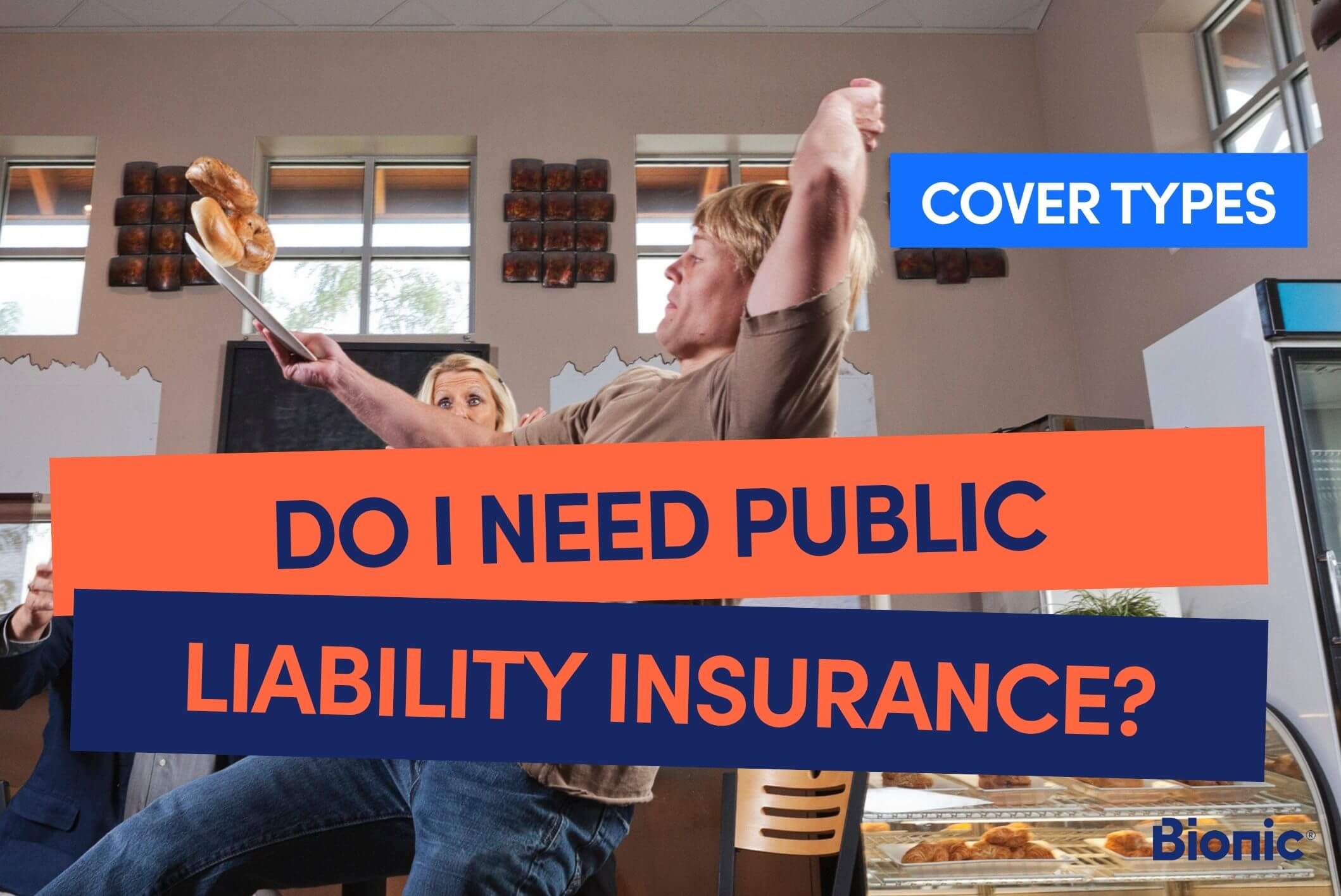
Typically, a policy may pay out when, for example, a customer slips on a wet floor in your shop, or a visitor trips over your equipment at an event you are running. The injured party then makes a claim against your business, and your public liability insurer should cover the cost of defending that claim and, if you are found liable, cover the compensation you need to pay.
What’s the different between public liability vs professional indemnity?
Remember, public liability insurance is not the same as professional indemnity insurance, which helps cover claims from incorrect advice or professional negligence if you provide professional services. It’s also not the same as employers' liability insurance, which is a legal requirement if you employ staff and helps cover injury or sickness claims from employees as a result of their work. Despite them being different, they may still be needed. Public liability is usually sold together with employers' liability on one policy. Professional indemnity can be sold together with public liability, but in the majority of cases it's added on if needed.
What public liability cover limits do I need?
Cover limits in the UK can vary depending on the nature of your work and risks you face, among others. Public liability cover can start at £1 million and extend to £2 million, £5 million, or £10 million. At Bionic, we offer cover from £1 million to £10million for PL depending on your trade or activities, but this is normally sold as a part of wider insurance. If you're a tradesman, public liability can often be sold as standalone cover. Some contracts — particularly those with your local council or big businesses — may ask for a minimum level of cover, so it is worth checking the terms of any contract before actually buying a policy.
Is public liability insurance a legal requirement in the UK?
Public liability insurance is not a legal requirement under UK law for most businesses. Unlike employers' liability insurance — which is compulsory under the Employers' Liability (Compulsory Insurance) Act 1969 for any business with one or more employees — there is no equivalent legislation that says you need public liability cover by law.
That said, for certain small businesses it can be essential to have it in place to help protect against claims, and you might need it if you work with the following:
- Licensed premises - Some local councils may require proof of public liability insurance as a condition of granting a premises licence or street trading permit. So, if you’re starting up a cafe, your local council might ask to see proof of your public liability insurance.
- Government contracts – If you work with the government or local authorities you usually are required to hold a minimum of £5 million in public liability cover.
- Venues - Event venues and shared workspaces frequently require hirers to produce evidence of public liability insurance before allowing access.
Many membership bodies and trade associations like those in construction or events may require you to have public liability insurance as a condition of the membership. Always check this yourself if you’re not sure.
"A lot of small business owners may assume that because they're careful and haven't had a big accident yet, they're low risk. But liability claims don't always come from big events — a delivery driver tripping on your doorstep, or a client blaming damaged equipment on your visit, can be enough to trigger a claim that could cost you thousands without the right cover in place. " — Tara Mitchell, Insurance Technical Manager, Bionic
What's the difference between employers' and public liability insurance?
Both employers' liability insurance and public liability insurance might fall within the category of liability cover, but they actually protect against different types of claims, from different people.
| Employers' Liability Insurance | Public Liability Insurance | |
| Who makes the claim | An employee (current or former) | A member of the public, client, or third party |
| What it covers | Injury or illness caused to an employee as a result of their work | Injury or property damage caused to a third party by your business |
| Legal requirement? | Yes — under the Employers' Liability (Compulsory Insurance) Act 1969 | No — but often required by contract or licence conditions |
| Minimum cover | £5 million (legally required) | Varies — commonly £1m to £10m |
| Who needs it | Any UK business with one or more employees | Any business interacting with the public, other businesses or organisations should consider it |
H2: Who needs public liability insurance?
If you’re a business that interacts with other people who aren’t your employees, then you should consider public liability insurance. There is a risk of a claim wherever your business and the public overlap – this could be at your store, in a cafe, off-site for work or a client visit in your office.
To break it down, you are may need public liability insurance if you:
- Run your business from a physical premises – If you are open to customers, such as a shop, cafe, salon, gym, or office where you often invite clients
- Work on client sites — including builders, electricians, plumbers, cleaners, and other tradespeople. Learn more about tradesman insurance.
- Attend events or markets — where members of the public interact with your stall, equipment, or products
- Work in public spaces — such as dog walkers, photographers, or mobile beauticians. Learn more about beauty therapist insurance.
- Run events — whether businesses events, events in the community, or private functions
Even a business that operates primarily online may need cover if it holds stock at a physical location, uses couriers, or meets clients face-to-face.
"We offer cover for over 6,000 different types of businesses, and many should consider public liability - even those with 1-10 employees. Remember, the size of your business doesn't help protect you against costly claims.” — Ollie Barrett, Senior Technical Insurance Manager at Bionic.
Find insurance for your business type with Bionic.
Who doesn't need public liability insurance?
There are some cases where businesses might not need public liability because the risk of a claim is genuinely very low, so it may not be worth it. You may not need public liability insurance if you:
- Work entirely from home with no clients, customers, or members of the public visiting your property
- Provide fully remote services with no on-site work and supply no physical goods
- Work in a sector where a different form of liability cover — such as professional indemnity insurance — is the industry standard and your contracts never require you to have public liability cover
Even in these cases, your circumstances could change. If your business grows, you take on a new type of work, or a new client contract requires PL cover, you might want to reconsider.
It is always worth reviewing your insurance cover once a year or whenever your business changes – like you open up an additional shop, launch a new product or hire more employees.
Get public liability insurance with Bionic
Bionic means business, this means we make it easy for UK small businesses, sole traders, and contractors to compare public liability insurance quotes from a panel of trusted insurers. Rather than approaching multiple providers individually, you can compare public liability insurance with Bionic and find a policy suited to your sector, cover level, and budget.
When comparing quotes, consider:
- The cover limit you need — check any contracts or licensing requirements for specified minimums
- What activities are included — some policies exclude specific trades or high-risk activities, so read the policy wording carefully
- Whether you need additional covers — public liability can often be bundled with employers' liability, tools cover, or professional indemnity as part of a broader business insurance package
Bionic's team of UK-based insurance brokers can help you to understand your options and arrange a policy for you. Get a quote today by starting a quote online.
Public liability insurance FAQs
Do I need public liability insurance as a sole trader?
Similarly to a small business, a sole trader, you are not legally required to hold public liability insurance, but it might be essential if you work with clients, customers, or the public. As a sole trader you would be personally liable for any claims made against you, just one claim could impact your cash flow. It’s possible that your clients may ask for proof of cover before working with you. According to the ABI's guidance on liability insurance for small businesses, liability cover should be considered for any independent professional who works with third parties. Your own insurance requirements depend on your unique needs, speak to a broker if you’re unsure.
Learn more about sole trader insurance with Bionic.
Do I need public liability insurance as a contractor?
Contractors might need to have public liability insurance as a condition of their contracts, particularly when working on client premises or alongside other tradesmen. It is not a legal requirement in, but some contracts in construction, facilities, and professional services sectors could require contractors to hold a minimum level of cover — which could be £1 million to £5 million but can vary on your contact. If you work through an agency or umbrella company, make sure to verify whether their cover extends to your activities or whether you need your own policy.
Learn more about contractor insurance with Bionic
Do I need public liability insurance for subcontractors?
If your business uses subcontractors, you should check whether your own public liability policy covers their work or whether they are required to hold their own cover. Most insurers will require subcontractors to hold their own public liability insurance, and your policy may exclude claims from work carried out by uninsured subcontractors. Consider asking each subcontractor for proof of insurance before they begin work. You can always speak to your broker to check if your own policy if you are unsure.
Do I need public liability insurance if I am self-employed?
Self-employed individuals are not legally required to hold public liability insurance, but the same risk logic applies as for sole traders. If your self-employed work involves visiting clients, working in public spaces, or handling other people's property, a claim for accidental injury or damage will fall to you personally. According to research commissioned by the ABI, large numbers of UK SMEs are either uninsured or underinsured — a risk that is particularly acute for self-employed workers who bear full personal liability. Many clients and trade associations will require you to hold cover as a condition of engagement.
Do I need public liability insurance for a holiday let?
Holiday let owners should consider specialist cover holiday lets that includes public liability cover. As standard home insurance policies typically do not cover paying guests, and a claim from an injured guest — who is, legally, a third party — could be excluded. The ABI guidance on liability insurance confirms that public liability cover should be considered where members of the public interact with your business activities — and short-term letting like holiday rentals comes under that. If you list your property on platforms such as Airbnb, check what host protection they provide and whether it is sufficient, or whether you need additional cover. At Bionic we don't sell public liability insurance for holiday lets as standalone cover