Do I need employers' liability insurance?


If you run a business and take on staff — even temporarily — the question of whether you need employers' liability insurance is one you can't afford to get wrong. This guide cuts through the jargon and tells you exactly where you stand, whether you're a sole trader, limited company director, or anyone in between.
Quick Answer:
Most UK businesses that employ staff are legally required to hold employers' liability insurance under the Employers' Liability (Compulsory Insurance) Act 1969. You must carry a minimum of £5 million in cover and show proof of it when asked. If you don’t, you could get a fine of £2,500 for every day you operate without it. There are some exemptions for sole traders working alone and some family-run businesses without limited company status – but always check with a qualified broker if you are unsure.
Want to learn about more insurance types, visit our Bionic business insurance guides hub.
This content is for general information purposes only. It does not constitute insurance advice and should not be relied upon as such. Always read the full policy documents and consult an FCA-authorised broker if you're unsure on cover options.
What is employers' liability insurance?
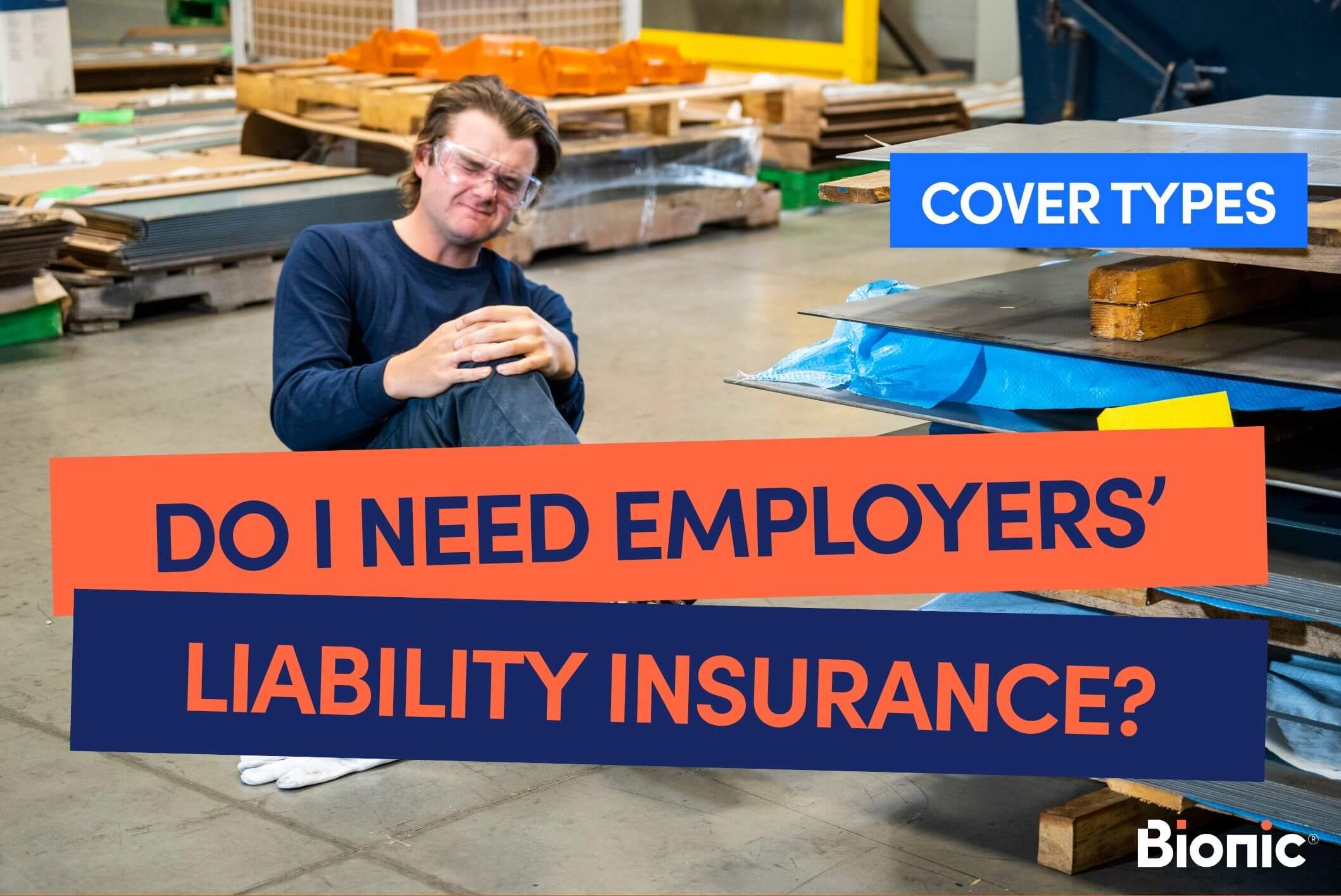
Employers' liability (EL) insurance is a type of business insurance that helps covers the cost of compensation claims made by employees who suffer a work-related injury or illness. If a member of your team is hurt on the job — say, an employee injures their back unloading stock, or a factory worker develops a respiratory issue from chemicals — EL insurance can help towards legal costs and any compensation your business might need to pay.
The cover typically includes:
- Compensation payments to employees injured or made ill due to their work
- Legal defence costs if a claim goes to court
- Claims from former employees in some circumstances
Unlike many types of business insurance, employers' liability cover is not optional for most UK businesses — it's the law.
Is employers' liability insurance a legal requirement in the UK?
Yes — for most UK businesses that employ one or more people, employers' liability insurance is a legal requirement under the Employers' Liability (Compulsory Insurance) Act 1969.
The law requires you to hold a minimum of £5 million in EL cover from an FCA authorised insurer, you can check this here. At Bionic, we are authorised and trusted by UK businesses. Most policies on the market offer £10 million as standard. You must be able to show proof of your employers’ liability insurance to staff, suppliers or partners if they ask.
According to the Health and Safety Executive (HSE), businesses that don’t have valid EL cover can face a fine of £2,500 for every day they operate uninsured.
"Employers' liability insurance is a key insurance cover for most businesses who employ anyone – you never know when an accident could happen on the job, especially if employees are on their feet, working with tools or prone to stressful situations." — Ollie Barrett, Senior Technical Insurance Manager at Bionic.
What's the difference between public and employers' liability insurance?
Employers' liability insurance helps cover claims made by your employees while public liability insurance helps cover claims made by third parties like customers, clients, or members of the public.
Here's a quick comparison:
| Feature | Employers' liability insurance | Public liability insurance |
| Who it covers claims from | Employees and workers | Customers, clients and the public |
| Legal requirement? | Yes, for most businesses with staff | No (but sometimes required by contracts) |
| Minimum cover level | £5 million | Typically £1m–£5m+ |
| Who needs it | Any business with employees | Any business with public contact should consider it |
| Example claim | A staff member slips and breaks their wrist during a shift | A customer trips over a cable in your shop, causing injury |
Many brokers can offer both covers together, along with others in a combined policy, which can be good options for premised small businesses. Start a quote online today to see your options.
Who needs employers' liability insurance?
You need employers' liability insurance if you employ people in the UK — including part-time staff, temporary workers, apprentices, and in many cases contractors and volunteers.
Under the Employers' Liability Act 1969, the definition of an employee is actually quite broad and extends beyond a ‘normal’ employee. The HSE states that you likely need EL cover for anyone who:
- Works under you –this includes interns, apprentices, trainees and volunteers
- Uses equipment or tools you supply
- Has their National Insurance and income tax deducted by your business (PAYE)
- Cannot subcontract their work to someone else without your agreement
This means businesses across almost every sector — from construction businesses taking on labourers to cafes hiring weekend staff — need cover. If you're unsure whether someone counts as an employee for insurance purposes, speak to your broker.
"It might be common to assume that a trainee hairdresser or someone doing work experience in your shop – doesn't need to covered by insurance. But that’s not the case as they still come under what counts as an ‘employee’, so if you bring on anyone, even for a limited time you should tell your insurer to make sure your employers liability cover extends to include them.” - Tara Mitchell, Insurance Technical Manager at Bionic.
Who doesn't need employers' liability insurance?
Some businesses are legally exempt from the employers' liability requirement, this means some don't need it - but there are very few instances of this.
You may not need employers' liability insurance if:
- You are a sole trader with no employees — If you work completely alone, there is no legal requirement for EL cover.
- You employ only yourself as a director — If you are the sole employee and director of your limited company and own more than 50% of the share capital, you may be exempt, but you should always check this with your broker.
- You are a public body — certain nationalised industries, health service bodies, and government departments are exempt.
The key word here is may. If your business falls into one of these areas you should always speak to a broker to double check you don’t need employers’ liability, you can also check the HSE guidance on EL exemptions.
Get employers' liability insurance with Bionic
At Bionic, we champion UK businesses. We make it easy to find employers' liability cover that fits your business, along with other covers you might need on one single policy. Whether you run a small plumbing firm, a restaurant, or a growing agency, you can compare employers' liability insurance with Bionic as part of a wider insurance policy and get quotes from a panel of trusted, FCA-authorised insurers — all in one place.
Getting started takes a few minutes. You'll need to know:
- The number of people you employ (full-time, part-time, and casual)
- Your total annual payroll
- Your business sector and any specific risk factors
If you own a physical premises, our UK based brokers will be on-hand to guide you through your options. Start a quote online today to get going.
Employers' liability insurance FAQs
Do I need employers' liability insurance for contractors?
Whether you need employers' liability insurance for contractors depends on how you work with them. If a contractor works under your supervision, uses your equipment, and cannot send a substitute in their place, the HSE may treat them as a worker for employers' liability purposes — which means you need cover. If a contractor is genuinely independent, operates their own business, and has their own insurance, you are less likely to need employers' liability cover for them.
Do I need employers' liability insurance for subcontractors?
You do not automatically need employers' liability insurance for subcontractors, but you may need it if they act like employees. The HSE states that if you control how and when they work, supply the tools, and deduct tax and NI, employers' liability cover is likely needed. Many businesses in construction, trades, and events rely on subcontractors — so if this applies to you, speak to your broker to check if you need it.
Do I need employers' liability insurance for a limited company?
If your limited company has employees other than yourself, yes — you are legally required to hold employers' liability insurance. The only exception for limited companies is if you are the sole director, sole employee, and hold more than 50% of the share capital of your business. In almost every other instance — including hiring your first member of staff — employers' liability cover is a legal requirement. According to Companies House, limited company directors have personal liability for any issues if they don't get this right, which makes knowing whether you need it or not, pretty important.
Do I need employers' liability insurance for self-employed workers?
Whether you need employers' liability insurance for self-employed workers depends on how they work, not how they describe themselves. HMRC and the HSE use employment status tests that look at several factors. A self-employed person who works exclusively for you, follows your direction, and uses your tools may be considered a worker or employee in law — which means you need EL cover. If in doubt, use HMRC's Check Employment Status for Tax (CEST) tool as a starting point.
Do I need employers' liability insurance for part-time employees?
Yes — part-time employees are employees in law, and you are legally required to hold employers' liability insurance for them. The Employers' Liability Act 1969 makes no difference between full-time and part-time staff. Whether someone works 3 hours a week or 30, if they are employed by your business and you control how they carry out their work, EL cover is legally required. According to the Office for National Statistics (ONS), around 8 million people in the UK work part-time — a big proportion of staff that every employer, big or small, is legally responsible for protecting.
Ready to find the right cover? Compare employers' liability insurance with Bionic and get quotes from trusted, FCA-authorised insurers today.