
















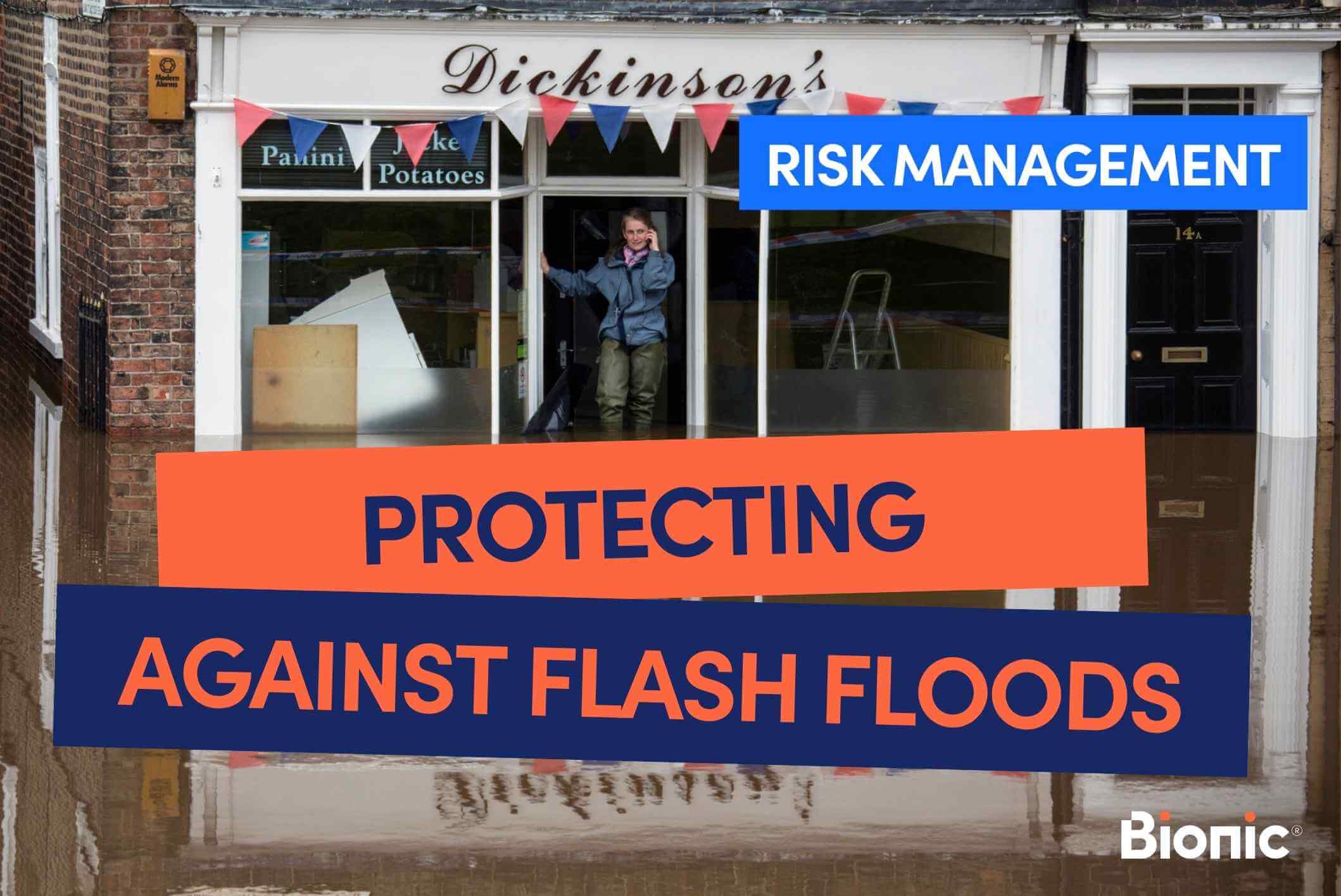
How to protect your business against flash flooding


Flash flooding is difficult to predict and it can be even harder for businesses to recover from. From damaged stock and ruined equipment to lost income and temporary closure, a single flood can cause devastating disruption to companies of all sizes.
Whether you own a shop, office, warehouse, cafe, salon or any business with a premises, understanding your flood risk is important. Knowing how to prepare your premises, in case flash flooding hits, can make all the difference when it comes to potential damages In this guide, we explain how businesses should prepare for flash flooding, what steps to take during and after a disaster, and the right insurance can help protect your livelihood against material damage due to a flood.
What is the difference between ‘flash’ flooding vs flooding?
Flash flooding is much more severe than a usual flood and happens much quicker. For example, a flash flood is caused by heavy or excessive rainfall in a short period of time (normally hours) and causes severe disruption in that time. When you think of a normal flood, it may be caused by prolonged rain over days or even weeks, leading to a build up of water and flooding.
Tara Mitchell, Insurance Technical Manager at Bionic says, “Flash flooding can be caused when it rains so heavily, drainage systems can’t cope so water builds up on roads, paths and can even get into building more easily. Flash flooding could increase the risk of someone slipping on your property causing injury, which is why it’s important to assess your risk and put measures in place to help prevent that from happening.”
Is my business at risk of flash flooding?
Think it won’t happen to you? According to the UK Environment Agency, the number of properties at risk from surface water flash flooding has risen by 43% in recent years — meaning it could happen to you. Even if your premises have never flooded before, you can never be completely safe.
Flooding can happen for several reasons:
- Heavy rainfall - Sudden downpours can quickly overwhelm local drainage systems and public sewers
- Natural water sources - Nearby rivers, brooks, or canals can burst their banks
- Structural failures - Blocked commercial gutters or burst internal pipes can quickly cause severe water damage inside your building
Some commercial properties may be more vulnerable than others. You might face a higher risk if your business is located in a low-lying area, occupies an older building, or has a basement. Similarly, premises with large outdoor spaces or significant paved areas can experience rapid surface water build-up during bad storms.
Checking local flood maps and carrying out a formal business flood risk assessment will help you understand how exposed your premises are and where you need to improve protection.
How to prepare your business for flooding?
Carry out a business flood risk assessment
A flood risk assessment helps you identify exactly where water could enter your building and how it would affect your daily operations.
When assessing your premises, look at nearby water sources, local drainage systems, vulnerable entry points (like low doorways or air bricks), and any key equipment or stock stored at ground level. It’s also worth reviewing historical flooding patterns in your local area to see if your street is a recurring hotspot.
Once you’ve identified these risks, you can decide which measures are worth the investment.
Install flood protection measures
Protecting your premises doesn’t always require major construction. In many cases, relatively simple structural improvements can help reduce water damage:
- Flood barriers and waterproof door guards to seal off entry points
- Drain protection and non-return valves to stop sewage from backing up into your building
- Raised electrical sockets and wiring to keep them well above potential water levels
- Sump pumps to quickly clear water out of low-lying areas or basements during a bad weather warning
Upskill employees on flood emergency procedures
Having a clear, documented flood response plan ensures your team can act quickly and safely during an emergency. Make sure your staff knows:
- Who to contact immediately when a flood warning is issued
- How to safely shut down machinery, utilities, and electrical equipment
- The exact evacuation procedures and safe assembly points
Your plan should also include clear procedures for securing important business records, moving high-value stock, and communicating with customers in the event of a temporary closure. You should also review these emergency plans regularly so everyone knows their responsibilities. Remember, you’ll want to keep your customers and staff safe in there is a sudden flood, having a plan in place could reduce any panic and damages.
Check your drainage and building maintenance
Poor property maintenance can really increase the likelihood of flooding during periods of heavy rain. Blocked gutters, damaged roofs, cracked external pipes, and overflowing drains can all allow water to seep into your commercial premises.
Regular maintenance checks can help you catch these problems before they turn into expensive disasters. Keeping your drains and gutters entirely clear is especially important during autumn and winter when leaves and debris build up.
Move valuable stock and equipment above ground level
Where possible, avoid storing valuable items directly on the floor. Raising your stock, IT equipment, financial documents, or machinery onto high shelving or upper floors will minimise damage if water breaches the building. Even temporary shifts, such as moving ground-floor items to higher ground when a severe weather warning is issued, can save you thousands of pounds in losses.
Sign up for flood warnings and weather alerts
A few hours of advance warning can give you the vital time you need to protect your premises before bad weather hits. You can sign up for free flood alerts directly through the Environment Agency (or the relevant body in Scotland and Wales) and regularly monitor severe weather updates from the Met Office.
What to do if your business premises floods?
Despite taking every precaution, flash flooding can still overcome your defenses. Knowing how to react in the immediate aftermath can help limit further damage and speed up your business's recovery.
- Prioritise safety - Staff and customers must avoid entering flooded areas. Never wade through water where electrical systems or exposed wires might be compromised.
- Shut off utilities - If it is entirely safe to do so, switch off your gas, electricity, and water supplies at the mains.
- Document the damage - Once the immediate risk has passed, take clear photographs and videos of all affected areas, ruined stock, and damaged equipment. This visual evidence is critical for supporting your upcoming insurance claim.
- Notify your insurer - Contact your insurance provider as soon as possible to report the incident and get professional guidance on the next steps.
How can I protect my business?
The first thing to do if check your existing insurance policy, especially covers related to floods. It’s not uncommon for business owners to have no idea what they’re covered for or even who they’re insured with.
Here’s a rundown of covers that you could consider:
- If someone injures themselves on your property during a flood or due to falling/floating debris, then it’s essential to have public liability insurance to help against injury claims.
- Flash flooding can also stop you from trading. In this case, it's a good idea to consider if your insurance policy includes business interruption insurance, if that’s available to you.
- You should also consider protecting your building against damages caused by flash flooding occuring, with commercial property insurance.
Bad weather can strike any time, and there’s never a bad time to prepare your business.
What if I need to make a claim due to flash flooding?
While the exact claims process depends on your insurer, you will usually be asked to provide evidence of your losses.
To prevent delays and make the process as smooth as possible:
- Keep a thorough inventory list of all damaged items alongside receipts or proof of value.
- Do not throw away any ruined stock or equipment until your insurer, loss adjuster or claims representative has given you permission to do so, as they may want to inspect them.
- Log all instances of business interruption, keeping clear records of lost revenue and any extra expenses you incur to keep trading (such as hiring temporary premises or emergency repair costs).
- Keep all your documentation, emails, and phone logs completely organised in one place.
Compare business insurance quotes with Bionic
If you’re an SME owner, understanding how to help protect your business against flash flooding is essential when reviewing your insurance requirements.
At Bionic, we work with a panel of insurers and can help you compare business insurance options. Get in touch today or compare business insurance online by starting a quote today.
FAQS
Does insurance cover flood damage?
This depends on your own policy and your insurer. Policies vary per insurer, and limits and exclusions always apply. You should always check your own policy and carefully read the terms and conditions to understand if flood damage is included.
Do I need insurance if I'm not in a high-risk flood zone?
You should still consider it. Depending on the cover you choose, the right business insurance can not only help in the event of a flood, but also fire, vandalism and theft due to break in. You may also want to consider other types of cover for your business, for example cover for your equipment or stock. If you have any workers, then you legally need employers’ liability insurance in the UK.
Remember, not all flood-related insurance claims come from high-risk areas. Flooding can also be caused by heavy rainfall, storm damage and not just a result of being near rivers or coasts.
How much water does it take to cause serious damage?
Even an inch of water could cause serious damage to a small business. It can ruin flooring, drywall, electrical systems, your stock, and valuable equipment. Flash floods can also end up bringing along debris, contaminants, and even sewage.